
-
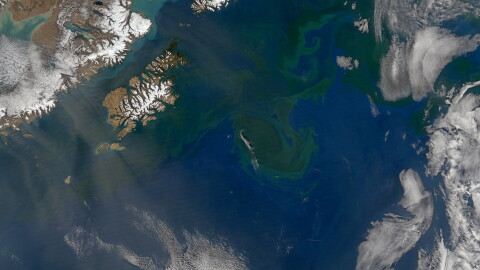 NASA/Goddard/OceanColor/MODISThe nutrients are vital for plankton, the base of the food chain that sustains the state's fisheries
 -
 Katherine Irving/KMXTAccording to photos provided by a Kodiak resident, there have been at least nine bears feeding on trash in the landfill at any given time this summer.


-
 According to the study, the number of tufted puffins counted on the archipelago's breeding colonies have dropped by 88% since 1975.
 -
 Although cases are rare in the state, researchers are worried the disease could become more prevalent as a result of warming temperatures.
 -
 Scientists worry the two phenomena will result in unusually warm conditions that could damage marine ecosystems.
 -
 Study authors say this means managers are doing a good job of regulating the population
 -
 2025 was another year of growth for Alaska’s mariculture industry, with more oysters and kelp harvested around the state. Those are some of the takeaways from a recent McKinley Research Group report.
 -
 There’s a common rule of thumb that it’s safe to harvest and eat shellfish during months that have an “r” in their names: September through April. But on the Kodiak road system, researchers are finding that’s just not true.
 -
 Friday, Oct. 10, Kodiak Area Native Association’s Environmental team sent an email lifting their advisory for all shellfish species. That's after the organization sampled toxic shellfish around Kodiak for nearly two consecutive months.
 -
 It’s about a 50% increase from 2023, according to a report from the National Oceanic and Atmospheric Administration, though the number can vary significantly from year to year.
 -
 An oil spill from a grounded fishing vessel was reported in Izhut Bay around 6 a.m. on Sept. 1. Commercial fishing in the area is closed until further notice.
 -
 "It's a little bit scary, because the more you learn, the more you realize how variable this is. But also, it doesn’t take much to switch that from no toxicity at all to a really high toxicity event," Steve Kibler, a scientist with NOAA who studies harmful algal blooms around Kodiak, said.


